Your First LinkedIn Post: How to Start Without Overthinking It
A practical guide to writing and publishing your first LinkedIn post. Why perfectionism kills most creators before they start, and how to push through the resistance.
PostKing Team
You've been thinking about posting on LinkedIn for months. Maybe years.
You know you should. You see colleagues and competitors building audiences. You have thoughts worth sharing. But every time you open that "Start a post" box, something stops you.
It's not that you don't know what to write. You have ideas. The problem is that none of them feel ready. Not polished enough. Not insightful enough. Not you enough.
So you close the tab. Tell yourself you'll post when you have something really good. And another month passes.
This guide is for you. Not more theory about content strategy or hook formulas—we'll get to those later. This is about understanding what's actually stopping you, and giving yourself permission to start.
The Real Reason You Haven't Posted
Let's name the fear: you're afraid of looking stupid.
Not just a little nervous—genuinely afraid. Afraid that your insight is obvious. Afraid that you'll expose some gap in your knowledge. Afraid that the people who know you professionally will read it and think differently about you.
This fear is completely rational. LinkedIn isn't anonymous. Your name, face, and professional reputation are attached to everything you post. The potential downside feels tangible: judgment, embarrassment, career consequences.
But here's what you're not calculating: the cost of not starting.
Every month you spend thinking about posting instead of posting, someone else in your industry is building an audience. They're becoming the person who gets asked to speak at conferences. They're becoming the name that comes up when someone needs a recommendation. They're becoming visible in ways that lead to opportunities you won't even know you missed.
The fear of looking stupid is immediate and visceral. The cost of staying invisible is gradual and invisible. Our brains are terrible at weighing these fairly.
What Actually Happens When You Post
I've talked to hundreds of people about their first LinkedIn post. Here's what they expected versus what actually happened:
Expected: Everyone I know will see it and judge me. Reality: Most people you know will not see it. LinkedIn's algorithm shows your content to a fraction of your network. Your post will likely reach 5-15% of your connections.
Expected: If it doesn't perform well, people will notice my failure. Reality: Poor performance is invisible. There's no notification that says "John's post flopped." Other people only see success.
Expected: I need to have something profound to say. Reality: Authenticity outperforms profundity. Some of the most engaging posts are simple observations, honest questions, or personal updates.
Expected: My industry is too serious/technical/traditional for personal content. Reality: Every industry has people who post and build audiences. The ones who do stand out precisely because others think they can't.
Expected: I'll feel exposed and vulnerable. Reality: You'll feel exposed for about 30 minutes. Then life continues. A week later, you won't even think about it.
The anticipation of posting is worse than the posting itself. Every first-time poster I've talked to has said some version of: "I can't believe I waited so long."
The First Post That Actually Works
Forget trying to go viral. Forget hook formulas and engagement hacks. Your first post has one job: prove to yourself that posting is survivable.
Here are three formats that work well for first posts:
Format 1: The Introduction
Simply introduce yourself. Why you're on LinkedIn. What you do. What you're interested in.
This works because:
- It's authentic (you're actually new to posting)
- It sets expectations for future content
- It gives people a reason to follow you
- It's low-pressure—you're not claiming expertise
Example:
"I've been on LinkedIn for years but never posted. That changes today.
I'm a [role] at [company]. I spend my days [what you do]. I've been in this industry for [years] and I still find [aspect] fascinating.
Planning to share what I'm learning here—[topic 1], [topic 2], maybe some [type of content].
Fair warning: I'm new at this. But I'd rather be learning in public than staying quiet.
If you're in [industry/role], say hi. I'd love to connect with people who think about these things too."
Format 2: The Observation
Share something you've noticed in your work. Not advice—an observation. This is less pressure than claiming expertise.
This works because:
- It's something only you could see (from your specific vantage point)
- It invites conversation rather than positioning you as an authority
- It's low-stakes—observations can be wrong without damaging credibility
Example:
"Something I've noticed after [X] years in [industry]:
[Observation about a pattern, change, or trend you've seen]
I'm not sure what to make of it yet. But it keeps coming up.
Anyone else seeing this?"
Format 3: The Lesson
Share one thing you've learned. Not ten things. One thing. Make it specific and personal.
This works because:
- Personal lessons feel genuine, not preachy
- Specificity suggests actual experience
- One lesson is more memorable than a list
Example:
"Took me [years/time] to learn this, but:
[The lesson, stated simply]
I used to think [old belief]. But after [experience that changed your mind], I realized [new understanding].
Sometimes the obvious things take longest to see."
The Permission Slip You're Waiting For
Here's what I want you to understand: you don't need to be qualified to post on LinkedIn.
You don't need X years of experience. You don't need a big title. You don't need a track record of success. You don't need to have figured everything out.
All you need is something you've noticed, something you've learned, or something you're curious about. And you have those things. I know you do, because everyone does.
The bar for posting is not "expert with perfect insight." The bar is "person with a perspective." That's it.
The people who build audiences on LinkedIn aren't smarter than you. They aren't more qualified. They simply started posting before you did. They got comfortable being visible. They learned by doing.
You can do the same thing. Today.
Handling the Inner Critic
The voice in your head that says "this isn't good enough" will not go away. Not with your first post, not with your hundredth.
The goal isn't to silence the critic. It's to post anyway.
A few reframes that help:
"What if nobody engages?" Then nobody engages. You'll still have proven you can post. And your next post will be informed by what you learned. Engagement is a lagging indicator—it takes time to build.
"What if people disagree?" Disagreement is engagement. It means people care enough to respond. You can learn from disagreement without being destroyed by it.
"What if this is obvious to everyone else?" What's obvious to you is often not obvious to others. And even if it is, people appreciate being reminded of important things.
"What if my writing isn't polished enough?" LinkedIn is not the New Yorker. Authenticity beats polish. Some of the most viral posts have grammatical errors.
"What if I'm not ready?" You will never feel ready. The readiness comes from posting, not before.
The Minimum Viable Post
If you're truly stuck, here's the lowest-pressure first post possible:
"Trying something new: actually posting on LinkedIn.
Been here for [years], mostly lurking. Time to change that.
No big agenda. Just want to share what I'm learning about [topic].
Let's see how this goes."
That's it. 40 words. You can write that in two minutes.
It doesn't need to be insightful. It doesn't need to prove anything. It just needs to exist.
After You Post: What to Do
Once you post, you'll want to obsessively check how it's doing. This is natural. Try to resist for at least a few hours.
When you do check, here's what matters:
If it performs well (lots of impressions, engagement): Great! But don't expect this every time. First posts sometimes catch a wave because LinkedIn's algorithm tends to boost new posters.
If it performs poorly (few views, no engagement): This is normal. Most first posts don't go viral. The value wasn't in the performance—it was in proving you could do it.
If someone comments: Respond. Every comment. This matters both for the relationship and for the algorithm.
If you get a negative response: It happens. Evaluate if there's something to learn. If not, move on. You can't please everyone.
The most important thing: plan your second post. The gap between first and second is where most people stop. Don't let momentum die.
The Long Game
Your first post is the least important post you'll ever write.
It probably won't get much reach. It probably won't be your best work. It probably won't lead directly to any opportunity.
But it's also the most important post you'll ever write. Because without it, there is no second post. No tenth post. No hundredth post. No audience. No opportunities. No compounding returns from years of visibility.
Every creator you admire on LinkedIn has a first post somewhere in their history. Most of them are unremarkable. They kept going anyway.
That's the only difference between them and you: they started.
Get Your First Post Written
If you're staring at a blank screen, our first post generator can help you get started.
Enter a few details about who you are and what you want to share, and it'll give you several first-post options to choose from.
You can use them as-is or customize them. Either way, you'll have something concrete to work with instead of staring at that blinking cursor.
Related Reads
You might also like
LinkedIn Post Ideas Generator
Try our free linkedin post ideas generator to enhance your LinkedIn presence.
LinkedIn Hook Generator
Try our free linkedin hook generator to enhance your LinkedIn presence.
How to Preview Your LinkedIn Posts Before Publishing (And Why It Matters)
A guide to previewing LinkedIn posts properly. How 'see more' truncation works, mobile vs desktop differences, and avoiding the formatting surprises that kill engagement.
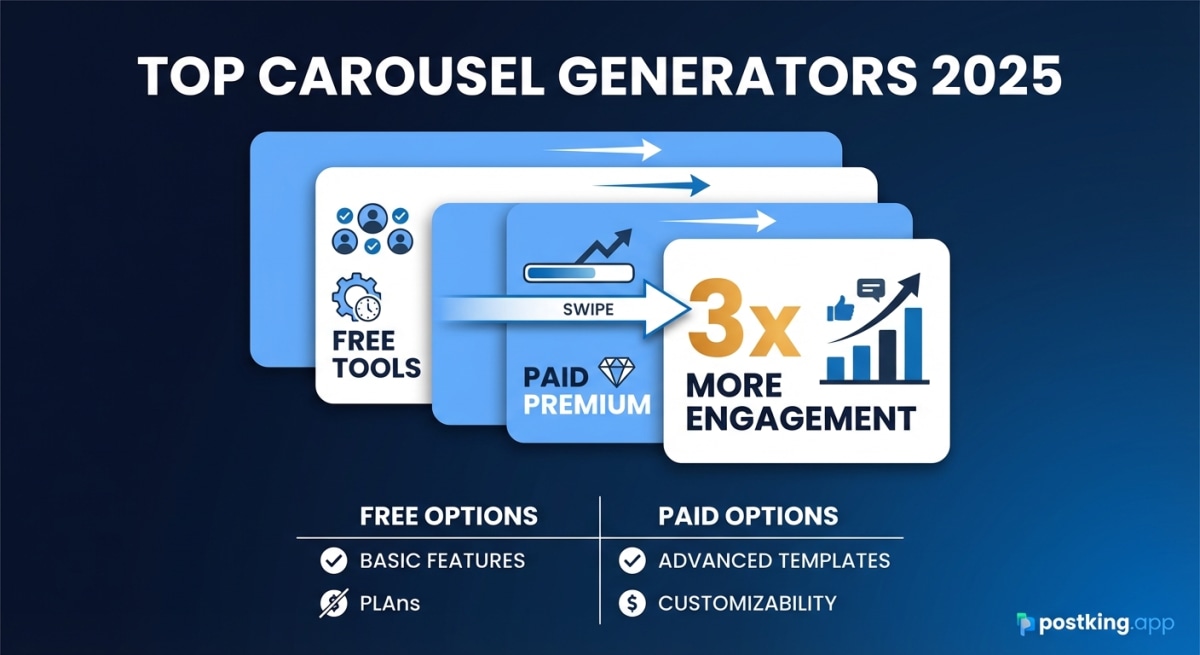
9 Best LinkedIn Carousel Generators in 2026 (Free & Paid)
Compare the top LinkedIn carousel generators including free and paid options. Find the right tool to create engaging carousels that get 3x more engagement than text posts.
LinkedIn Post Formatter
Try our free linkedin post formatter to enhance your LinkedIn presence.
How to Analyze Your LinkedIn Posts (And Actually Learn From the Data)
A framework for understanding why your LinkedIn posts succeed or fail. Moving beyond vanity metrics to the insights that actually improve your content.
LinkedIn Formatting: How to Use Bold, Italics, and Line Breaks That Actually Work
The complete guide to formatting LinkedIn posts. Why formatting matters for readability, what LinkedIn actually supports, and how to make your posts scannable without looking gimmicky.
more engagement with carousels
Create scroll-stopping LinkedIn carousels in under 60 seconds. No design skills needed.
Try Carousel Generator