LinkedIn Content Strategy for 2026: The Complete Framework
Build a LinkedIn content strategy that actually works in 2026. Includes the 4-pillar framework, content mix ratios, posting schedules, and algorithm-proof tactics backed by latest data.

Shanjai Raj
Founder at Postking
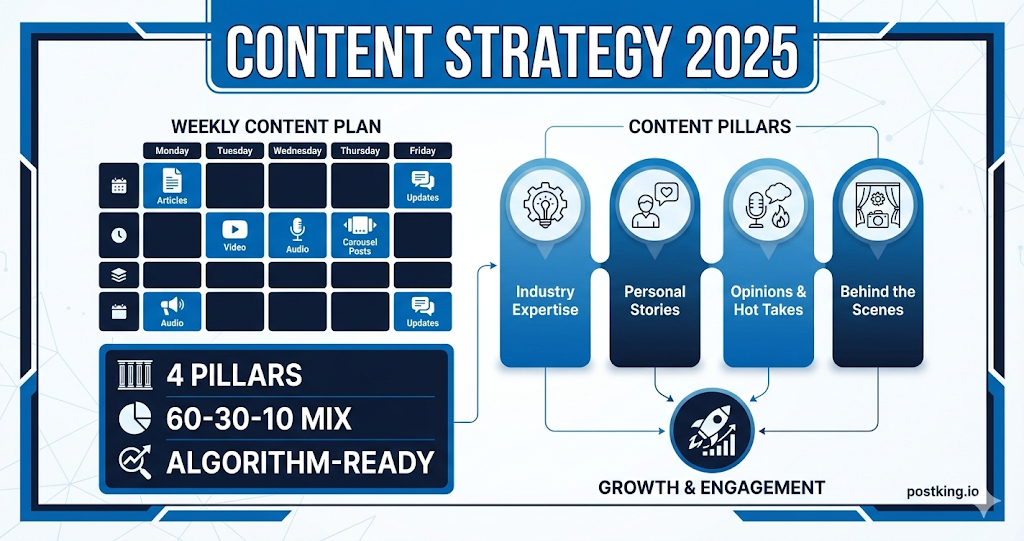
LinkedIn's algorithm got a major overhaul in 2026. Organic reach dropped 50%. Engagement fell 25%. Follower growth crashed by 59%.
Those numbers come from Richard van der Blom's Algorithm Insights 2026 report, and they're sending a clear message: the old playbook doesn't work anymore.
But here's what that same data reveals. Creators who adapted to the new algorithm are seeing better results than ever. The platform now rewards expertise, authenticity, and genuine engagement over growth hacks and engagement pods.
This guide gives you a complete LinkedIn content strategy framework built specifically for how the platform works right now. Not 2023 tactics. Not theory. What's actually working in 2026.
Why Most LinkedIn Strategies Fail
Before we fix your strategy, let's understand why the common approaches don't work.
Random posting - Posting whenever you have time means posting when your audience isn't online. LinkedIn's algorithm gives posts about 60 minutes to prove themselves. Miss that window with your target audience, and your content dies.
Copying competitors - That influencer posting daily? They built their audience under a different algorithm. What worked for them in 2022 won't work for you in 2026.
Chasing virality - LinkedIn's March 2026 "authenticity update" specifically targets engagement bait and artificial tactics. Posts asking people to "comment YES if you agree" now get buried.
No clear focus - The algorithm now tracks your posting patterns to determine your areas of expertise. Posting about 10 different topics means LinkedIn can't identify you as an authority in any of them.
A working strategy in 2026 needs structure, consistency, and a focus on genuine value.
The 4-Pillar Content Framework
Every sustainable LinkedIn strategy rests on four content pillars. These are the core themes you'll return to repeatedly, signaling expertise to both your audience and the algorithm.
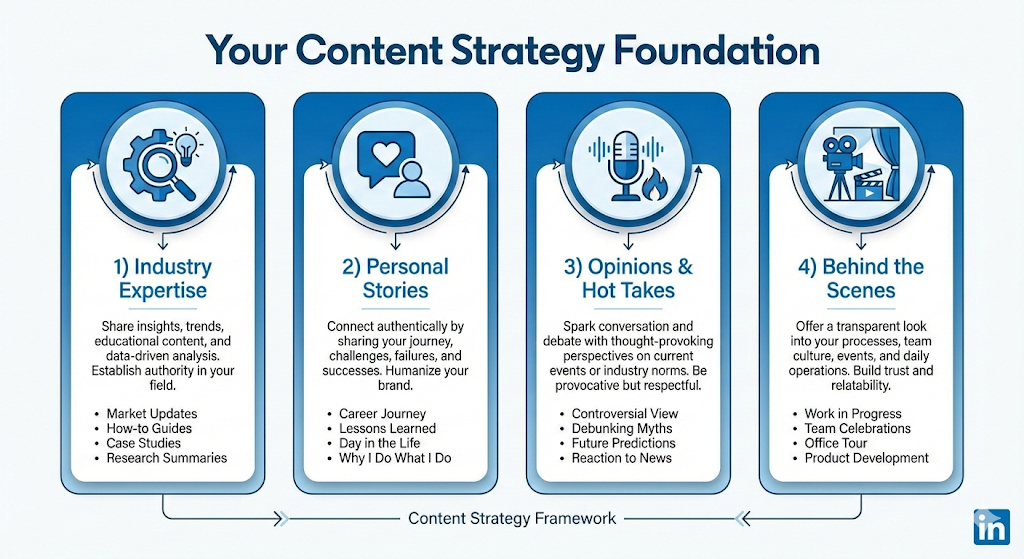 LinkedIn 4-Pillar Content Framework
Pillar 1: Industry Expertise
This is your professional knowledge. Trends in your field. Analysis of what's happening. News and developments your audience cares about.
Why it works: LinkedIn's algorithm now identifies subject-matter experts and boosts their content to relevant audiences. Consistent posting within your expertise area builds that recognition.
Examples:
- Breaking down a new industry report
- Analyzing a competitor's strategy shift
- Explaining regulatory changes affecting your field
Pillar 2: Personal Experience
Stories from your career. Lessons you've learned. Mistakes you've made and what they taught you. The human side of your professional life.
Why it works: The 2026 algorithm heavily prioritizes "authentic" content. Posts showing real experiences (including failures) consistently outperform polished corporate messaging.
Examples:
- A client project that didn't go as planned and what you learned
- How you handled a difficult career decision
- The worst advice you received early in your career
Pillar 3: Practical Value
Actionable content your audience can implement immediately. Frameworks, templates, step-by-step guides, and specific tactics.
Why it works: Posts that generate saves (LinkedIn tracks this) signal high value. Practical content gets saved. It also generates comments from people asking follow-up questions, which the algorithm loves.
Examples:
- A 5-step framework for [your expertise]
- Tools you use daily and why
- Common mistakes in your field and how to avoid them
Pillar 4: Thought Leadership
Your opinions on where your industry is heading. Hot takes (backed by reasoning). Predictions. Perspectives that challenge conventional thinking.
Why it works: Contrarian viewpoints generate discussion. Discussion means comments. Comments mean reach. But only when your take is substantive, not just provocative for its own sake.
Examples:
- Why a popular industry practice is outdated
- What you think will change in your field over the next year
- A prediction most people would disagree with
Defining Your Specific Pillars
The framework above is a template. You need to customize it for your situation.
Step 1: Identify your expertise area
What do people pay you for? What questions do colleagues ask you? Where do you have genuine depth? Pick ONE primary area. The algorithm rewards specialists over generalists.
Step 2: Define your pillar themes
For each of the four pillars, write 3-5 specific topics you can address. For example, if you're a B2B sales leader:
- Expertise: Sales methodology trends, CRM best practices, pipeline management
- Experience: Deals won and lost, team leadership lessons, career transitions
- Practical: Cold email templates, call scripts, objection handling frameworks
- Thought Leadership: Why traditional quotas don't work, the future of AI in sales
Step 3: Validate with your audience
Check your past content performance. What topics generated the most engagement? What questions do people ask in your comments and DMs? Build your pillars around proven interest.
Content Types That Work in 2026
Not all content formats perform equally. The algorithm has clear preferences now.
What's Working
Native video - LinkedIn reports video gets a 69% performance boost when your face or brand appears in the first four seconds. Short-form video (under 2 minutes) is particularly strong.
Carousels - Still the engagement king with 278% higher engagement than video and 596% higher than text posts. But there's a catch. Generic "10 tips" carousels with stock photos now get penalized. What works: detailed case studies, original data, specific frameworks with real examples. Learn how to create high-performing carousels.
Text posts with depth - Long-form text posts (1,200-2,000 characters) that tell a complete story or deliver genuine insight. Quality comment threads matter more than ever.
Native documents - PDFs and presentations shared directly on LinkedIn. 5.85% average engagement rate, making them the second-highest performing format.
What's Declining
External links - LinkedIn continues deprioritizing posts with links. If you must share a link, put it in the first comment, not the main post.
Engagement bait - "Comment YES if you agree" style posts are actively penalized. The algorithm now analyzes comment quality, not just quantity.
Pods and artificial engagement - LinkedIn's AI got better at pattern recognition. It tracks comment velocity, account relationships, and semantic content of comments. Pods that worked in 2023 now hurt your reach.
Overly promotional content - Posts that feel like sales pitches get buried fast. The algorithm is particularly aggressive about suppressing direct product promotion.
Posting Frequency and Schedule
The data on posting frequency is clearer than ever.
Optimal frequency: 3-4 posts per week
Posting more often doesn't help. Research shows posting twice daily can actually hurt reach because LinkedIn doesn't want any single creator flooding the feed.
Best days: Tuesday, Wednesday, Thursday
Tuesday consistently shows the highest engagement, followed closely by Wednesday. Thursday performs well but starts to decline. Monday mornings are chaotic (people catching up), and Friday afternoon attention drops off a cliff.
Best times: 8-10 AM and 12-2 PM (your audience's time zone)
The "golden hour" still matters in 2026. Posts that get strong engagement in the first 60 minutes get pushed to a wider audience. Time your posts for when your target audience is active and ready to engage.
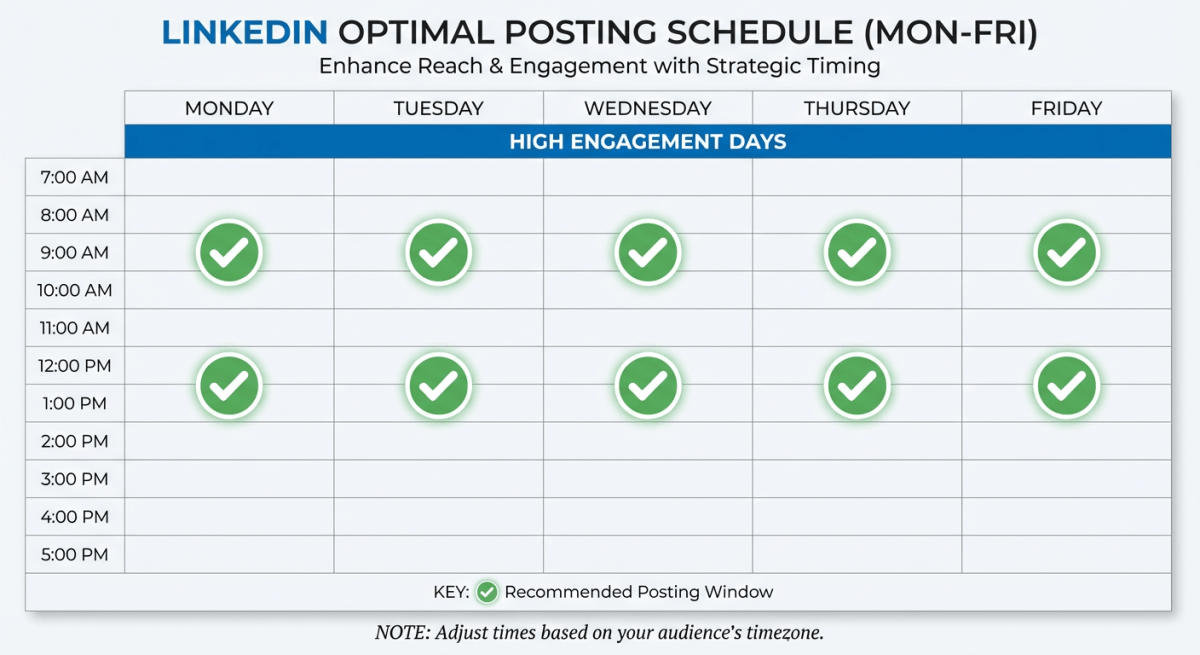 Weekly LinkedIn Posting Schedule
Building Your Weekly Schedule
Here's a practical approach:
Tuesday 8 AM: Your strongest content piece of the week. Industry expertise or thought leadership.
Wednesday 12 PM: Practical value content. Framework, tips, or how-to content.
Thursday 9 AM: Personal experience story. Something authentic that shows your human side.
Optional Friday 10 AM: Lighter content. A quick observation, lesson, or reflection to close the week.
Start with three posts per week. Get consistent. Then add a fourth once you've found your rhythm.
For specific timing guidance based on your industry and audience, check out our complete breakdown of best times to post on LinkedIn.
Content Mix: The 60-30-10 Ratio
Not every post should be the same type. Here's the ratio that's working in 2026:
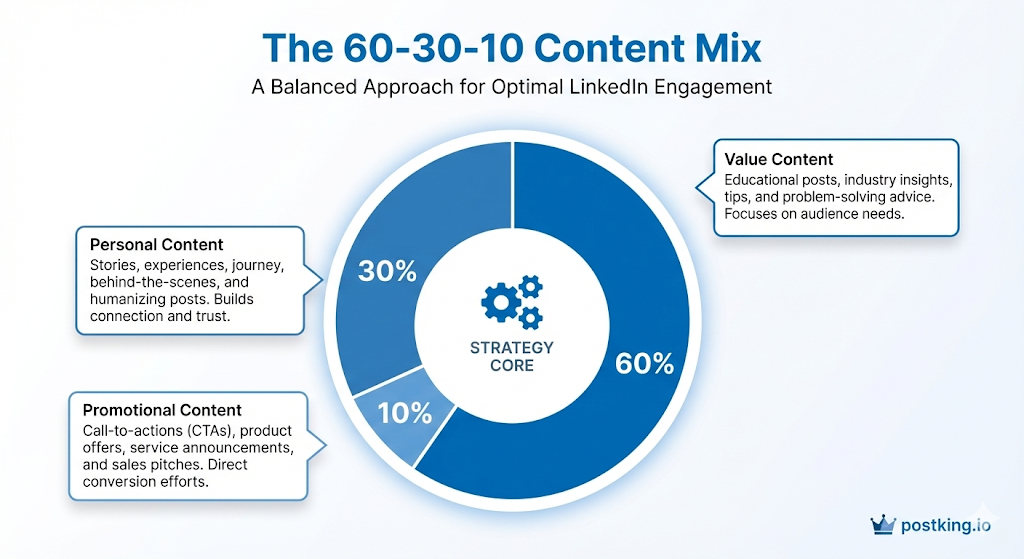 LinkedIn Content Mix Ratio
60% Value Content
Educational posts, insights, frameworks, and practical tips. This is your bread and butter. Posts that help your audience solve problems or learn something new.
These posts build trust and establish expertise. They're what makes people follow you in the first place.
30% Personal Content
Stories, experiences, lessons learned, and behind-the-scenes glimpses. Content that shows the human behind the expertise.
This creates connection. People do business with people they feel they know. Personal content (done well) generates the highest engagement rates.
10% Promotional
Direct mentions of your company, product, or services. Job openings you're hiring for. Announcements and news.
Yes, just 10%. Any more than this and you start looking like a corporate broadcast account. The algorithm also suppresses accounts that post too much promotional content.
Applying the Ratio
If you're posting 4 times per week, that means:
- 2-3 value posts
- 1-2 personal posts
- 1 promotional post every 2-3 weeks (not every week)
This ratio isn't rigid. Some weeks you'll have more personal content. Others you'll be heavy on value posts. What matters is the overall balance over a month.
The Content Repurposing System
Creating original content 4 times per week is hard. Repurposing makes it sustainable.
One strong piece of content can become 5-10 LinkedIn posts. Here's how to think about it:
From Long-Form to LinkedIn
Blog post becomes:
- 3-4 text posts covering individual sections
- 1 carousel summarizing the main points
- 1 video explaining the key takeaway
Podcast episode becomes:
- Quote graphics from memorable moments
- Text post expanding on one idea from the discussion
- Carousel of the main lessons
Webinar or presentation becomes:
- PDF document post with the slides
- Text posts from each main section
- Video clips of key moments
From LinkedIn to LinkedIn
Your own best-performing content is your best source for new content.
Text post that performed well becomes:
- Carousel expanding on the concept (carousels get 3x more shares)
- Video explaining the same idea with more context
- Follow-up post going deeper on one aspect
Carousel becomes:
- Individual text posts from each slide
- Video walking through the content verbally
The key insight: your audience didn't see your content the first time. Only a fraction of followers see any given post. Repurposing isn't lazy; it's strategic.
Repurposing Timeline
- Immediately: Transform format (text to carousel, carousel to video)
- 2-4 weeks later: Expand on popular posts with more detail
- 2-3 months later: Repost top performers with minor updates
LinkedIn doesn't penalize repurposed content as long as you're not posting the exact same thing repeatedly.
Algorithm Factors in 2026
Understanding what LinkedIn's algorithm measures helps you create content that performs.
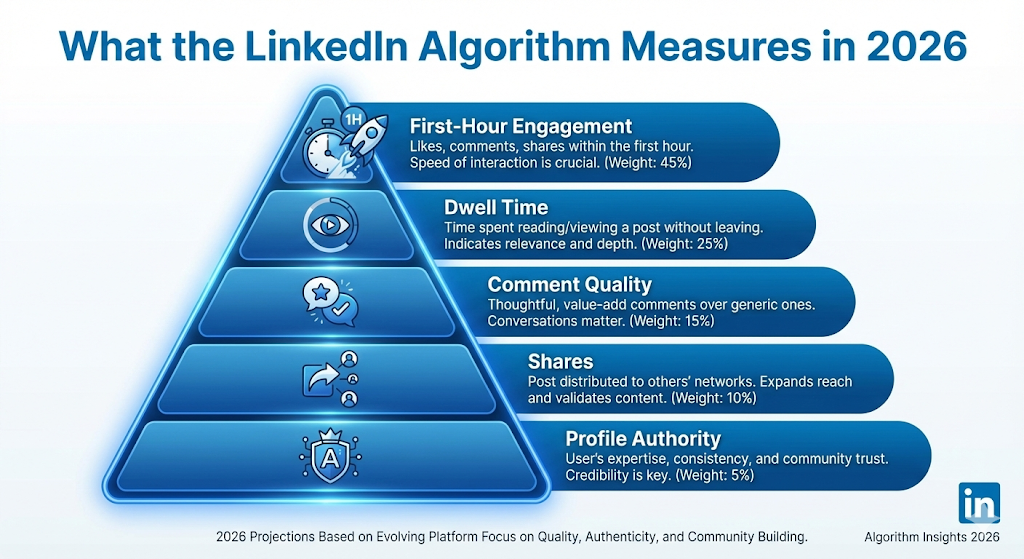 LinkedIn Algorithm Factors 2026
What the Algorithm Measures
First-hour engagement - The most critical window. Strong early engagement (especially comments) signals quality content. This determines whether LinkedIn shows your post to a wider audience.
Dwell time - How long people spend reading your content. Longer posts that hold attention outperform short posts that get skipped quickly.
Comment quality - LinkedIn now analyzes comments for substance. A post with 12 thoughtful, multi-sentence comments outperforms a post with 50 generic "Great post!" reactions.
Content authenticity - The algorithm got better at detecting AI-generated generic content. Posts with original perspectives and real examples perform better.
Creator expertise signals - Consistent posting about specific topics builds your authority score. The algorithm is more likely to show your content to people interested in those topics.
Profile completion - This matters more than people realize. Complete profiles with relevant keywords get better distribution.
What Hurts Your Reach
- Editing posts within the first hour
- External links in the main post
- More than 5 hashtags
- Tagging more than 5 people
- Engagement pods (yes, LinkedIn detects them now)
- Posting more than once per day
- Generic AI-generated content
Measuring Success: The Metrics That Matter
Stop obsessing over vanity metrics. Here's what actually indicates a working strategy.
Primary Metrics
Engagement rate - Total engagements divided by impressions. Anything above 4% is solid. Above 6% is excellent. Track this trend over time, not individual posts.
Comment-to-like ratio - Comments signal deeper engagement than likes. A post with 10 comments and 50 likes is outperforming one with 5 comments and 200 likes.
Follower growth rate - Track weekly, not daily. Consistent growth of 1-3% weekly indicates a working strategy.
Profile views - Are people checking your profile after seeing your content? This indicates genuine interest.
Secondary Metrics
Content saves - Shows people found your content valuable enough to revisit. High save rates correlate with practical, framework-heavy content.
Direct messages - The real ROI metric. How many conversations are your posts starting?
Website clicks - If you're using LinkedIn to drive traffic, track link clicks (even though they're deprioritized).
Benchmarks for 2026
Based on current data:
- Average engagement rate: 3.85% (up 44% year-over-year)
- Good engagement rate: Above 4%
- Excellent engagement rate: Above 6%
- Top performer: Above 8%
Multi-image posts average 6.60% engagement. Native documents hit 5.85%. Video averages 5.60%. Use these as benchmarks for different content types.
Your 30-Day Action Plan
Turn this strategy into action with a structured rollout.
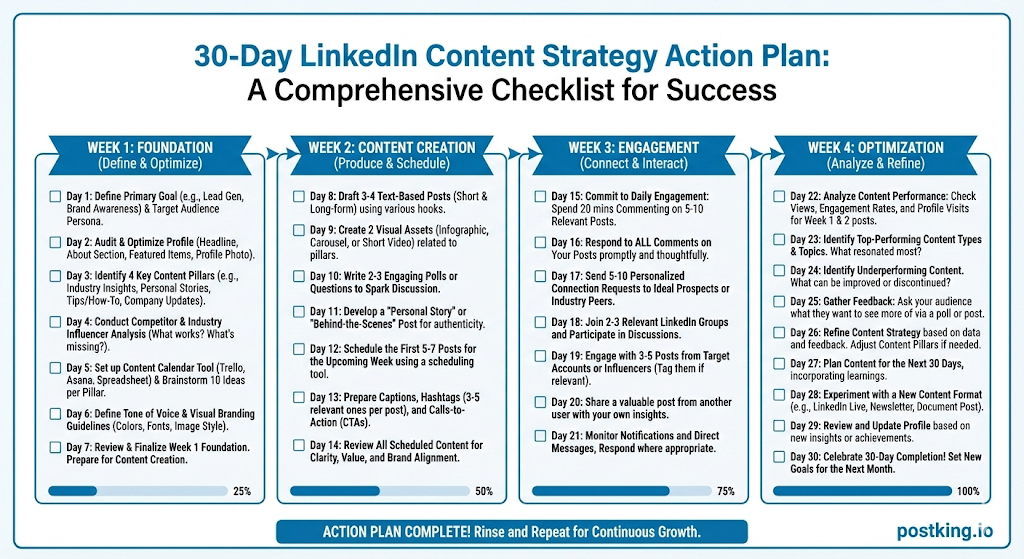 30-Day LinkedIn Content Strategy Action Plan
Week 1: Foundation
Day 1-2: Define your pillars
- Write down your ONE area of expertise
- List 3-5 specific topics for each of the four pillar categories
- Identify which topics you have the most to say about
Day 3-4: Audit your profile
- Update headline to reflect your expertise area
- Rewrite your About section with keywords your audience searches for
- Ensure profile photo and banner look professional
Day 5-7: Build your content bank
- Write 8-10 post ideas (enough for 2-3 weeks)
- Draft at least 4 complete posts
- Identify 2-3 pieces of existing content you can repurpose
Week 2: Launch
Post schedule:
- Tuesday 8 AM: First post (value content)
- Thursday 12 PM: Second post (personal story)
- Saturday: Plan next week's content
Daily habit (15-20 minutes):
- Engage with 5-10 posts in your feed with thoughtful comments
- Respond to all comments on your posts within 2 hours
- Connect with 3-5 relevant people
Week 3: Optimize
Mid-week review:
- Which posts got the most engagement?
- What times seem to work for your audience?
- What content type is resonating?
Adjustments:
- Double down on what's working
- Test a new format (if you haven't tried carousels, try one)
- Refine your posting times based on early data
Week 4: Scale
Increase to 4 posts per week:
- Add your third or fourth content pillar
- Start planning repurposed content from top performers
- Build a sustainable long-term schedule
Establish routines:
- Set specific times for content creation
- Create a weekly engagement block (30 minutes dedicated to commenting)
- Schedule monthly content audits
Common Questions
Q: Should I use AI to write my LinkedIn posts?
AI is fine for brainstorming, outlining, and editing. But posts that sound obviously AI-generated perform worse in 2026. The algorithm seems to detect generic AI content, and audiences can definitely tell. Use AI as a starting point, then edit heavily to add your voice, specific examples, and genuine perspective.
Q: How long should my posts be?
For text posts, 1,200-2,000 characters tends to perform best. Long enough to provide real value, short enough to hold attention. The first 2-3 lines are crucial since that's what shows before "see more." Make them count.
Q: Should I post on weekends?
Generally no. Engagement drops 60-70% on weekends. Exception: if your specific audience is active on weekends (some industries are), test it. But for most B2B audiences, stick to Tuesday-Thursday.
Q: How many hashtags should I use?
3-5 hashtags. More than 5 can trigger spam detection. Mix broad hashtags (#Marketing, #Sales) with niche ones specific to your industry. Place them at the end of your post.
Q: My posts aren't getting engagement. What's wrong?
Most common issues: posting at wrong times (check your audience's timezone), weak hooks (first 2-3 lines don't create curiosity), no engagement in first hour (you post and walk away), content too generic (could apply to anyone), or inconsistent posting (algorithm hasn't learned to promote you yet).
Start This Week
You don't need a perfect strategy. You need to start.
Pick one content pillar. Write one post. Publish it Tuesday at 8 AM in your audience's time zone. Spend 30 minutes after posting engaging with comments and other content in your feed.
Then do it again Thursday.
Build the habit first. Optimize later.
Need help formatting your posts? Postking's free post formatter handles spacing, line breaks, and structure so your content looks professional. Create carousels without design skills. Focus on the content. Let the tools handle the formatting.
The LinkedIn algorithm will keep changing. But the fundamentals won't. Consistent posting. Genuine expertise. Real engagement with your community.
Build those habits, and your strategy will work regardless of what the algorithm does next.
Sources:
- Hootsuite - How the LinkedIn Algorithm Works in 2026
- Agorapulse - LinkedIn Algorithm 2026 Update
- Buffer - Best Time to Post on LinkedIn 2026
- Sprout Social - Best Times to Post on LinkedIn
- Social Insider - LinkedIn Benchmarks 2026
- Supergrow - LinkedIn Content Strategy Guide
- Taplio - LinkedIn Content Strategy
Related Reads
Written by
Shanjai Raj
Founder at Postking
Building tools to help professionals grow on LinkedIn. Passionate about content strategy and personal branding.
View all postsYou might also like
LinkedIn Posting Frequency Calculator
Try our free linkedin posting frequency calculator to enhance your LinkedIn presence.
LinkedIn Post Ideas Generator
Try our free linkedin post ideas generator to enhance your LinkedIn presence.
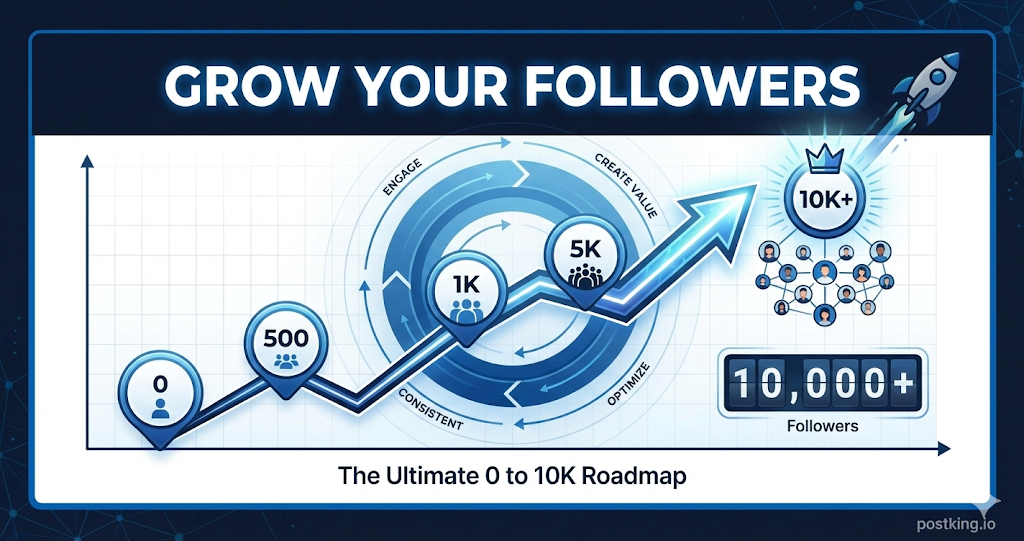
How to Grow LinkedIn Followers: A Realistic Guide to Organic Growth
Learn proven strategies to grow your LinkedIn following organically. Covers the follower growth flywheel, content that attracts followers, engagement tactics, and realistic timelines from 0 to 10,000 followers.
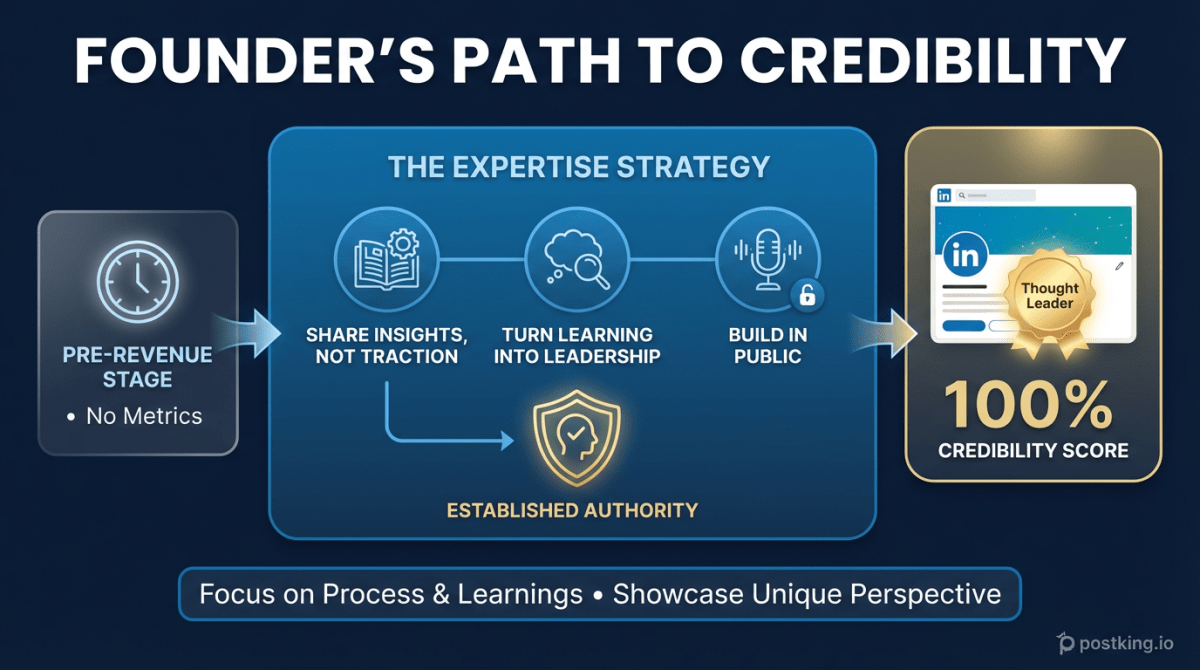
The Pre-Revenue Founder's LinkedIn Playbook: Building Credibility When You Have No Metrics
Learn how to build LinkedIn authority as a pre-revenue founder. Discover content strategies that establish credibility through expertise, not traction, and turn 'still figuring it out' into thought leadership.
LinkedIn Hook Generator
Try our free linkedin hook generator to enhance your LinkedIn presence.
LinkedIn Client Acquisition for Coaches and Consultants (2026)
A client-focused LinkedIn strategy for coaches and consultants. Build authority, attract high-ticket clients, and convert profile views into calls.
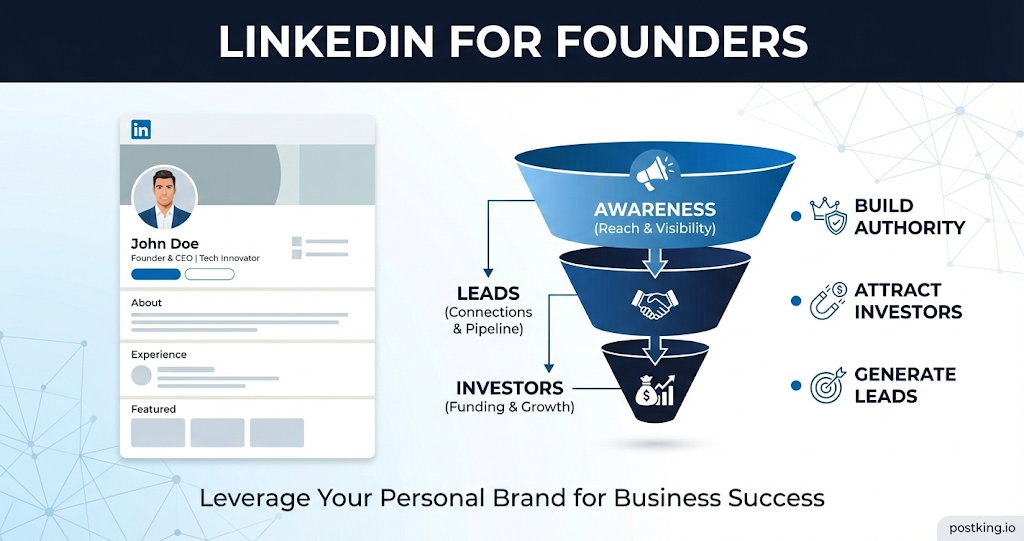
LinkedIn Growth Strategy for Founders (2026 Guide)
A complete LinkedIn growth playbook for founders to build authority, attract investors, and grow pipeline.
more engagement with carousels
Create scroll-stopping LinkedIn carousels in under 60 seconds. No design skills needed.
Try Carousel Generator