How to Position Yourself as a Premium Consultant on LinkedIn: Pricing & Perception
Your LinkedIn profile directly impacts your pricing power. Learn the exact positioning signals that separate $200/hour consultants from $2,000/hour consultants.
Postking Team
Your LinkedIn profile is your pricing page. Whether you realize it or not, every element of your presence—from your headline to your content—signals your value and justifies (or undermines) your rates.
The difference between a consultant charging $200/hour and one charging $2,000/hour often isn't their actual expertise. It's how they position that expertise on LinkedIn.
This guide shows you exactly how to position yourself as a premium consultant, with specific language patterns, content strategies, and positioning signals that command higher rates.
Why LinkedIn Positioning Affects Your Pricing Power
Before we dive into tactics, understand this: prospects use your LinkedIn to justify their budget.
When someone considers hiring you:
- They compare your profile to other consultants they're evaluating
- They look for signals of specialization, results, and sophistication
- They use your content to assess your thinking and approach
- They gauge your selectivity (do you work with anyone, or are you selective?)
A commodity-positioned consultant makes it easy to say "let's find someone cheaper." A premium-positioned consultant makes prospects think "we need to work with this person specifically."
The Commodity Positioning Trap: What to Avoid
These signals scream "I'm competing on price":
1. Generic, Capability-Based Headlines
Commodity positioning:
- "Business Consultant | Strategy & Growth"
- "Marketing Consultant | Helping Businesses Grow"
- "Fractional CMO | Marketing Strategy Expert"
Why it's commodity: These could describe 10,000 other consultants. There's no specialization, no specific value, no differentiation.
2. Service-List Bios
Commodity positioning: Your About section lists services:
- "I offer strategic planning, market analysis, competitive research, business development..."
Why it's commodity: You're positioning as a vendor with a menu of services, not a specialized expert with a unique methodology.
3. Availability-Focused Language
Commodity positioning:
- "Available for new clients"
- "Currently accepting projects"
- "Open to opportunities"
Why it's commodity: This signals desperation and low demand. Premium consultants are selective, not available.
4. Generic Proof Points
Commodity positioning:
- "10+ years of experience"
- "Worked with Fortune 500 companies"
- "MBA from Top University"
Why it's commodity: These are table stakes. They don't differentiate you or signal specific value.
5. Reactive Content
Commodity positioning:
- Sharing other people's content without commentary
- Generic tips: "5 ways to improve your marketing"
- Jumping on trending topics you're not expert in
Why it's commodity: You look like everyone else in the feed. There's no unique perspective or specialized insight.
Premium Positioning Signals: What to Add
Premium consultants use these specific signals:
1. Outcome-Specific Headlines
Premium positioning:
- "I help B2B SaaS companies scale from $5M to $50M ARR without losing their culture"
- "Positioning strategist for technical founders who need to translate complexity into demand"
- "I fix broken sales processes for professional services firms losing deals to cheaper competitors"
Why it works:
- Specific outcome (scale to $50M, translate complexity, fix sales processes)
- Specific audience (B2B SaaS, technical founders, professional services)
- Specific problem (cultural dilution, complexity, losing to cheaper competitors)
Formula: "I help [specific who] achieve [specific outcome] without/despite [specific challenge]"
2. Methodology-Based About Sections
Premium positioning:
Start with the problem:
"Most B2B SaaS companies hit a wall at $5-10M ARR. They know they need to scale, but traditional growth tactics—more ads, more reps, more features—create chaos, not revenue."
Introduce your approach:
"Over the past 12 years, I've developed the Revenue Architecture Framework: a systematic approach to building scalable growth systems that don't depend on heroic effort."
Provide specific proof:
"This framework has helped 47 B2B SaaS companies break through growth plateaus, including [Company A] (3x revenue in 18 months) and [Company B] (reduced CAC by 60% while doubling deal size)."
Why it works:
- Problem-focused opening (shows you understand their world)
- Named methodology (signals proprietary thinking)
- Specific results with named companies (credible proof)
3. Selectivity Language
Premium positioning:
- "I work with 4-6 clients per year"
- "My clients typically engage for 6-12 month transformations, not short-term projects"
- "I'm selective about fit—happy to refer you elsewhere if we're not aligned"
Why it works: Scarcity signals value. Being selective means you're in demand and thoughtful about who you work with.
In your Experience section:
"Select Client Engagements (2023-Present)
I work with a limited number of B2B SaaS companies annually on revenue architecture transformations. Recent engagements include..."
4. Results-Quantified Case Studies
Premium positioning:
In your Featured section, showcase detailed case studies:
Case Study Format:
- Client context: "Series B SaaS company, $8M ARR, struggling with 40% churn"
- Your approach: "Implemented the Revenue Architecture Framework over 9 months"
- Specific results: "Reduced churn to 12%, increased expansion revenue by 180%, added $4.2M in ARR"
- Client quote: "'[Name] completely transformed how we think about growth' - CEO"
Why it works: Specific numbers, named frameworks, and client testimonials create undeniable proof of value.
5. Thought Leadership Content
Premium positioning:
Share content that demonstrates:
Deep expertise:
- "The mistake I see in 90% of SaaS pricing strategies (and the alternative)"
- "Why your sales process is your actual product (with examples)"
- "The hidden cost of 'good enough' positioning: a breakdown"
Proprietary frameworks:
- "The 3-tier content model that's generated 40+ inbound leads for my clients this quarter"
- "My diagnostic for identifying which growth lever to pull first (with decision tree)"
Contrarian perspectives:
- "Why I tell half my prospects not to hire a consultant"
- "The problem with most B2B content marketing (and what works instead)"
Why it works: This content positions you as someone who thinks differently, has developed unique approaches, and gets results others don't.
Content That Signals High-Value Work
Premium consultants use LinkedIn content strategically to reinforce positioning:
Share Client Work (With Permission)
Example post:
"Just wrapped a 6-month engagement with [Company/Industry].
When they came to me, they were losing 60% of deals to 'cheaper alternatives.'
The problem wasn't their pricing. It was their positioning.
Here's what we changed:
[Detailed breakdown of approach and results]
If you're losing deals on price, the answer isn't lowering your rates. It's changing how prospects perceive value."
Why it works: Shows you do real work with real clients and get real results. Reinforces your specific expertise.
Share Your Contrarian Thinking
Example post:
"Unpopular opinion: Most consultants are too cheap.
Not because they're undervaluing themselves (though they are).
But because low rates attract bad clients:
- Clients who want tasks done, not problems solved
- Clients who micromanage instead of trusting expertise
- Clients who want quick fixes, not transformations
When I raised my rates by 3x, my client quality improved 10x.
Premium pricing is a filter, not a barrier."
Why it works: Demonstrates confidence, challenges conventional thinking, and positions you as premium.
Share Your Process
Example post:
"Before I take on any client, they go through my 3-phase qualification:
Phase 1: Problem Clarity
- Do they understand the real problem, or just symptoms?
- Is this problem worth solving (real business impact)?
Phase 2: Commitment Assessment
- Are they ready to implement (not just strategize)?
- Do they have internal buy-in for change?
Phase 3: Fit Evaluation
- Is this in my zone of genius?
- Can I deliver 10x value on their investment?
I say no to ~40% of initial conversations. Not because they're bad companies, but because we're not the right fit.
Being selective isn't about being difficult. It's about ensuring great outcomes."
Why it works: Shows you're selective, have a process, and focus on fit and results—all premium signals.
Language Patterns for Premium Positioning
Headline Examples by Specialization
Strategy Consultants:
- "I help [industry] companies navigate [specific transition] without [common failure mode]"
- "Strategy partner for [specific type of company] scaling from [milestone] to [milestone]"
Marketing Consultants:
- "I build category-creating positioning for [type of company] tired of competing on price"
- "Fractional CMO for [industry] companies who've outgrown tactics and need strategy"
Sales Consultants:
- "I fix broken B2B sales processes for companies losing deals they should win"
- "Sales system architect for [industry] companies scaling past founder-led sales"
Operations Consultants:
- "I help [type of company] scale operations without losing their minds (or their culture)"
- "Operational transformer for companies drowning in growth"
About Section Structure
Opening (Problem Hook):
"If you're a [type of company] struggling with [specific problem], you've probably tried [common failed solutions]. They don't work because [insight about why]."
Your Approach:
"For the past [X] years, I've specialized in [specific domain]. I've developed [named methodology/framework] that [specific approach/difference]."
Proof:
"This approach has helped [number] companies [specific outcomes], including:
- [Client A]: [Specific result]
- [Client B]: [Specific result]
- [Client C]: [Specific result]"
Selectivity:
"I work with [number] clients per year on [type of engagement]. I'm selective about fit—this work requires [specific commitment/characteristic]."
CTA:
"If [qualifying statement], let's talk. Message me with [specific information you need] and we'll see if there's a fit."
Experience Section Language
Instead of job descriptions, use case study format:
Premium format:
[Your Consultancy Name] | Principal [Year] - Present
I partner with [client type] on [type of transformation]. Recent engagements include:
[Client Industry] - Series B SaaS Company
- Challenge: [Specific problem]
- Approach: [Your methodology]
- Results: [Specific outcomes with numbers]
[Client Industry] - PE-Backed Services Firm
- Challenge: [Specific problem]
- Approach: [Your methodology]
- Results: [Specific outcomes with numbers]
Why it works: Shows real work, real clients, real results. Much more powerful than "Provided strategic consulting services to Fortune 500 companies."
Handling Price Questions on LinkedIn
When prospects ask about pricing via LinkedIn message, premium consultants use this approach:
Initial Inquiry Response
When they ask: "What are your rates?"
Premium response:
"Thanks for reaching out. My engagements typically range from [price range] depending on scope and outcomes.
Before we discuss pricing, I'd want to understand:
- What specific challenge you're facing
- What you've already tried
- What success looks like for you
Would you be open to a brief call? If we're aligned on the problem and approach, pricing tends to be straightforward. If we're not the right fit, I'm happy to point you toward other resources."
Why it works:
- Acknowledges the question (doesn't avoid it)
- Provides context (range, not fixed price)
- Redirects to value conversation
- Maintains control of sales process
- Offers value even if not a fit
Discovery Call Transition
When they're qualified but price-sensitive:
Premium approach:
"I appreciate you being upfront about budget. Here's how I think about pricing:
This engagement will [specific outcome]. Based on your numbers, that's worth approximately [$X] in [revenue/savings/value] over [timeframe].
My fee is [$Y], which represents [percentage]% of that value. Most clients see [return multiple]x return within [timeframe].
The question isn't whether you can afford this—it's whether you're ready to commit to the implementation required to get these results. That's actually the bigger investment.
Does that framing help?"
Why it works:
- Reframes from cost to value
- Quantifies return
- Positions implementation (not fees) as the real investment
- Maintains premium positioning
Case Studies: Premium Positioning in Action
Case Study 1: From Generalist to Specialist
Before (Commodity):
- Headline: "Marketing Consultant | Strategy & Growth"
- About: Listed 15 different services offered
- Content: Shared marketing tips and industry news
- Rate: $150/hour, competing with hundreds of similar consultants
After (Premium):
- Headline: "I help technical B2B companies explain complex products so buyers actually understand the value"
- About: Opened with the "curse of knowledge" problem, introduced "Clarity Framework," shared 3 detailed case studies
- Content: Deep dives on messaging challenges, before/after examples, framework breakdowns
- Rate: $15,000/month retainers, working with 6 select clients
Result: 10x revenue increase, better clients, more interesting work.
Case Study 2: From Available to Selective
Before (Commodity):
- Profile stated: "Currently accepting new clients"
- Responded to every inquiry immediately
- Agreed to "trial projects" and "small initial engagements"
- Constant hustle for next client
After (Premium):
- Profile stated: "I work with 4-6 companies per year on 6-12 month transformations"
- Implemented qualification process before discovery calls
- Offered alternative resources for poor-fit prospects
- Waitlist for new engagements
Result: Higher rates, better client quality, sustainable business model.
Case Study 3: From Task-Doer to Strategic Partner
Before (Commodity):
- Positioned as "experienced consultant available for projects"
- Sold deliverables (reports, plans, audits)
- Competed on turnaround time and price
- Client relationships ended when deliverable was submitted
After (Premium):
- Positioned as "transformation partner for [specific change]"
- Sold outcomes, not deliverables
- Competed on methodology and results
- Client relationships were 6-12 month partnerships
Result: 3x average project value, ongoing relationships, referral-based business.
Creating Premium Content with Postking
Maintaining premium positioning requires consistent, high-quality content that reinforces your expertise. This is where many consultants struggle—they know they should post, but creating thought leadership content takes time away from client work.
Postking solves this by helping you create positioning-aligned LinkedIn content efficiently:
Premium positioning content types:
- Framework breakdowns: Share your proprietary methodologies
- Case study narratives: Tell client success stories (with permission)
- Contrarian perspectives: Challenge industry assumptions
- Diagnostic tools: Offer value while demonstrating expertise
With Postking's AI, you can:
- Input your frameworks, methodologies, and client stories
- Generate thought leadership content that reinforces premium positioning
- Maintain consistent presence without sacrificing client work
- Build authority that justifies premium rates
Learn more about LinkedIn strategies for consultants or start creating premium content today.
Frequently Asked Questions
How long does it take to establish premium positioning on LinkedIn?
Repositioning takes 3-6 months of consistent execution:
- Months 1-2: Update profile, establish new positioning, begin content cadence
- Months 3-4: Content gains traction, start receiving better-fit inquiries
- Months 5-6: Positioning solidifies, can raise rates with new clients
The key is consistency. One premium post won't reposition you—but 50 premium posts over 6 months will.
Can I raise my rates with existing clients?
Existing clients hired you at your previous positioning and rates. Focus premium positioning on new client acquisition.
That said, as you add value and demonstrate results, you can:
- Increase rates for scope expansions
- Raise rates at annual renewal conversations
- Transition to retainer models that reflect ongoing value
What if I don't have fancy case studies yet?
Start with what you have:
- Results from previous employment (speak in general terms if needed)
- Pro bono or reduced-rate work (results still count)
- Your own business results (if applicable)
Then build case studies systematically:
- Document results from every client engagement
- Request permission to share anonymized versions
- Focus on specific, quantified outcomes
Premium positioning is about specificity and proof, not pedigree.
Should I remove my rates from my profile entirely?
Most premium consultants don't list rates publicly because:
- Pricing depends on scope and outcomes
- Public rates invite price shopping
- Discovery process determines true value
Instead, address pricing in discovery:
- "Engagements typically range from X to Y depending on scope"
- "Let's discuss your situation, then I can provide specific pricing"
How do I transition from my current positioning without confusing my network?
Transition systematically:
Week 1-2: Update profile elements (headline, about, experience) Week 3-4: Announce the repositioning in a post:
"After X years doing [old positioning], I'm focusing exclusively on [new positioning]. Here's why..."
Ongoing: Content that reinforces new positioning
Your network will adapt quickly if your new positioning is clear and consistent.
What if my premium positioning limits my addressable market?
That's the point. Premium positioning is about:
- Being the only option for a specific segment
- NOT being an option for everyone else
You're trading volume for value:
- Fewer prospects, but better-fit prospects
- Fewer clients, but higher-paying clients
- Narrower positioning, but stronger differentiation
A consultant who can help anyone will be chosen by no one.
How often should I post to maintain premium positioning?
Quality matters more than quantity. For premium positioning:
Minimum: 2-3 high-quality posts per week
- Deep insights, frameworks, case studies
- Thoughtful commentary on your niche
- Original thinking, not recycled content
Optimal: 3-5 posts per week
- Mix of formats (insights, stories, frameworks)
- Consistent presence without oversaturation
- Time to engage with comments meaningfully
Avoid: Daily posting of mediocre content just to "stay active"
One excellent post per week beats seven mediocre posts. Premium is about quality, not volume.
Your Premium Positioning Checklist
Use this to audit your current LinkedIn presence:
Profile Elements:
- Headline specifies WHO you help, WHAT outcome, addressing WHAT challenge
- About section opens with specific problem your clients face
- About section includes named methodology or framework
- About section has specific, quantified proof points
- Experience section uses case study format, not job descriptions
- Featured section showcases detailed client results
- No "open to opportunities" or "currently available" language
- Includes selectivity language (limited clients, specific criteria)
Content Strategy:
- Posting 2-3+ times per week consistently
- Content demonstrates deep expertise in specific domain
- Sharing proprietary frameworks and methodologies
- Using client stories and case studies (with permission)
- Offering contrarian or unique perspectives
- Every post reinforces your specific positioning
- Content shows the thinking behind your work, not just tips
Pricing Signals:
- Language emphasizes outcomes over activities
- Discussion of value and ROI, not time and tasks
- Client testimonials mention transformation, not satisfaction
- Engagement descriptions focus on business impact
- Selective about who you work with (stated explicitly)
- Long-term partnerships emphasized over short projects
Response Patterns:
- Qualify prospects before discussing pricing
- Frame pricing in context of value delivered
- Offer alternative resources for poor-fit prospects
- Demonstrate expertise in every interaction
- No desperate or available language in responses
Conclusion: Positioning Is Your Pricing Strategy
Your LinkedIn positioning directly determines your pricing power. Every element of your profile and content either reinforces premium value or undermines it.
The consultants commanding $2,000/hour aren't necessarily better than those charging $200/hour—they're better positioned. They've made strategic choices about:
- Who they specifically help
- What specific outcomes they deliver
- How they uniquely deliver those outcomes
- Why they're selective about who they work with
These positioning choices create pricing power because they transform you from "a consultant" to "the consultant for [specific situation]."
Your premium positioning journey starts today:
- Audit your profile against the checklist above
- Identify your specific positioning (who, what outcome, what challenge)
- Update your headline, about, and experience sections
- Start creating content that reinforces premium positioning
- Implement qualification process for new prospects
Remember: You're not trying to appeal to everyone. You're trying to be the obvious, only choice for a specific group of high-value clients.
That's how you build a premium consultancy.
Ready to create premium positioning content consistently? Try Postking and start building the LinkedIn presence that justifies premium rates.
Related Reads
You might also like
LinkedIn Posting Frequency Calculator
Try our free linkedin posting frequency calculator to enhance your LinkedIn presence.
LinkedIn Headline Generator
Try our free linkedin headline generator to enhance your LinkedIn presence.
LinkedIn Client Acquisition for Coaches and Consultants (2026)
A client-focused LinkedIn strategy for coaches and consultants. Build authority, attract high-ticket clients, and convert profile views into calls.
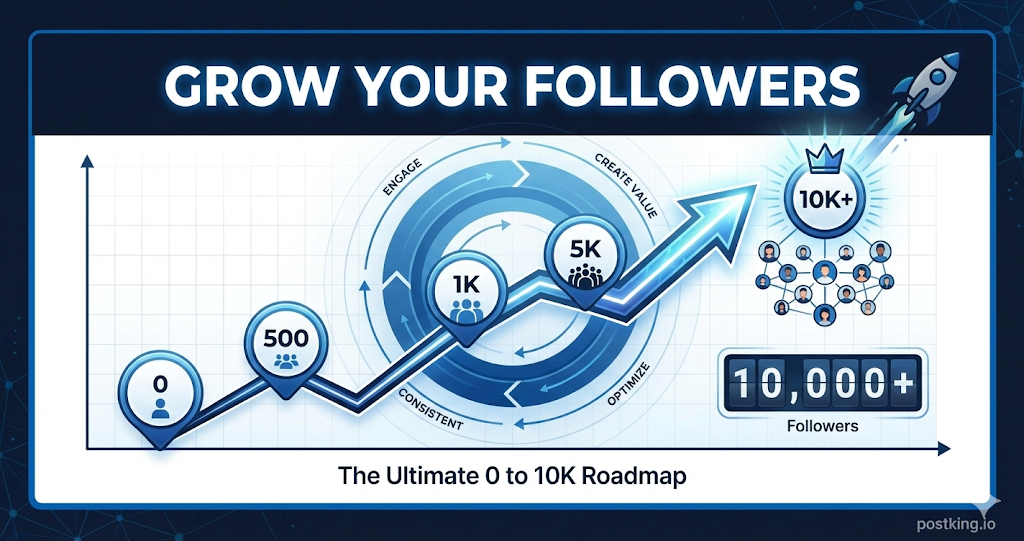
How to Grow LinkedIn Followers: A Realistic Guide to Organic Growth
Learn proven strategies to grow your LinkedIn following organically. Covers the follower growth flywheel, content that attracts followers, engagement tactics, and realistic timelines from 0 to 10,000 followers.
LinkedIn About Section Generator
Try our free linkedin about section generator to enhance your LinkedIn presence.
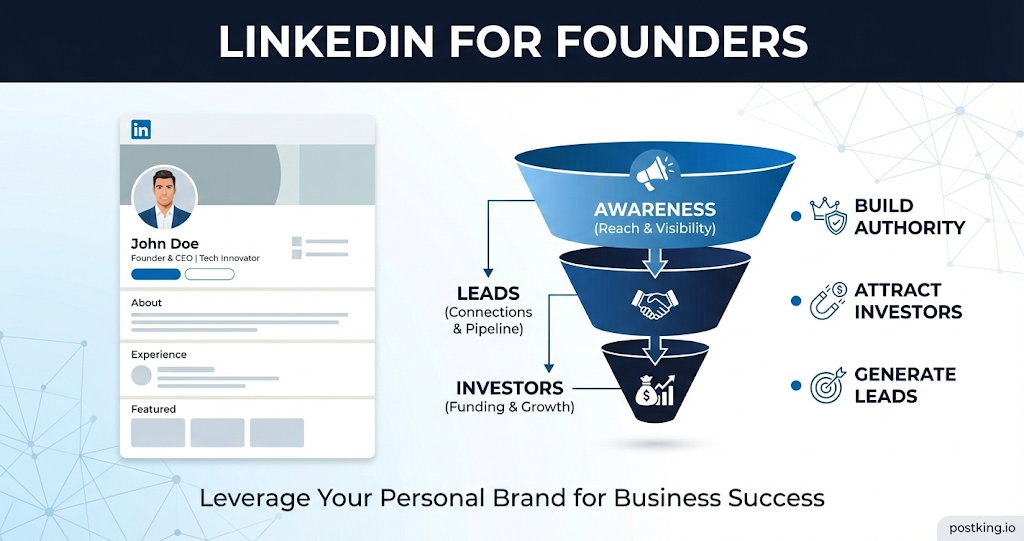
LinkedIn Growth Strategy for Founders (2026 Guide)
A complete LinkedIn growth playbook for founders to build authority, attract investors, and grow pipeline.
How Technical Founders Grow on LinkedIn Without Marketing
A practical LinkedIn strategy for technical founders to build authority without cringe or oversharing.
more engagement with carousels
Create scroll-stopping LinkedIn carousels in under 60 seconds. No design skills needed.
Try Carousel Generator