LinkedIn Growth Strategy for Solo Founders (2026)
A practical LinkedIn playbook for solo founders to build visibility and customers without a team.

Shanjai Raj
Founder at Postking
You're the CEO. The developer. The customer support rep. The accountant. And someone just told you that you also need to be a "content creator" on LinkedIn.
That's the moment most solo founders close the browser tab and go back to something that feels more urgent. Another support ticket. Another bug. Another sales call.
But here's the thing most solo founders eventually discover: LinkedIn isn't just another task competing for your time. Done right, it becomes the thing that makes everything else easier. Customers find you instead of you chasing them. Potential hires reach out before you post a job listing. Fellow founders offer advice before you have to ask.
The catch is that "done right" for a solo founder looks nothing like the advice written for people with marketing teams.
The Real Problem Isn't Time
When solo founders tell me they don't have time for LinkedIn, I believe them. But time usually isn't the actual blocker.
The real blockers look like this:
Decision fatigue: You've already made 50 decisions today. "What should I post?" feels like decision number 51, and your brain refuses.
No one to review: Employees at companies run posts by marketing. You're posting into the void, hoping you don't say something stupid.
The isolation spiral: Working alone all day, then trying to write something for strangers on the internet feels like performing for an empty room.
Imposter syndrome amplified: Without teammates validating your work, every post feels like it might expose that you have no idea what you're doing.
These aren't time problems. They're mental load problems. And the solution isn't "just make time for content" but rather building a system that removes the friction.
The 15-Minute Daily Routine That Actually Works
Forget the advice about "spending an hour a day on LinkedIn." You don't have an hour. You have fragments of time between shipping features and answering support emails.
Here's a routine designed for those fragments:
Morning check (3 minutes)
Open LinkedIn exactly once. Check notifications. If someone commented on your post, respond with something genuine (not "Thanks!"). Close the app.
The goal isn't engagement. It's maintaining presence so LinkedIn's algorithm knows you're active.
Midday capture (5 minutes)
This is the critical habit. Something happened today worth sharing. Maybe a customer said something interesting. Maybe you solved a problem. Maybe you're frustrated about something in your industry.
Open your notes app. Write one sentence capturing it. Don't wordsmith. Just capture.
Examples:
- "Customer asked why we don't have feature X. Made me realize our positioning is unclear."
- "Spent 2 hours debugging something that turned out to be a typo. There's a post in here somewhere."
- "Three people reached out about the same problem today. Pattern worth addressing."
That's it. One sentence. You're not writing the post yet. You're creating raw material.
Evening comment (7 minutes)
Find 3-4 posts from people in your space. Leave comments that add something. Share a perspective. Ask a genuine question. Disagree respectfully if you disagree.
This is where solo founder LinkedIn magic happens. Thoughtful comments on others' posts:
- Get you noticed by people in your target audience
- Build relationships without the pressure of creating original content
- Often spark ideas for your own posts
- Make you feel less alone
One week of this routine, and you'll have 5-7 raw ideas captured. That's your content for the following week.
 The 15-Minute Solo Founder LinkedIn Routine
Content Batching When You're Every Department
Traditional content batching assumes you can block two hours for creative work. Solo founders don't have that luxury. You have interrupts. Customers. Fires.
The solution is micro-batching: turning those raw captures into posts during natural transition moments.
The Friday afternoon batch (30 minutes)
Friday afternoon is when your brain is too fried for deep work but you're still at your desk. Perfect for content.
Pull up your week's captures. Pick 3. Expand each into a rough post. Don't publish yet.
The expansion formula:
- What happened? (2 sentences)
- Why does it matter? (2 sentences)
- What's the insight? (2 sentences)
- Question or takeaway (1 sentence)
That's 7 sentences. Maybe 100 words. You can write that in 10 minutes while half-watching a YouTube video.
The Sunday schedule (10 minutes)
Open your drafts. Read them fresh. Fix anything that sounds off. Schedule them for Monday, Wednesday, Friday mornings.
Ten minutes of work, three posts for the week.
The emergency backup
Keep 2-3 evergreen posts saved. When life explodes and you miss a batch, pull from the backup. No one knows the difference.
The Solo Founder's Authenticity Advantage
Here's what most content advice misses: the LinkedIn algorithm and audience both favor realness over polish.
A founder with a marketing team has constraints. Every post gets reviewed. Anything too honest might concern investors. Vulnerability needs to be carefully calibrated.
You have none of those constraints.
You can write:
"Shipped a feature at 11pm. Woke up to two emails saying it broke something else. Spent the morning fixing it. This is the glamorous startup life nobody talks about."
That post resonates because it's true and most people can't say it publicly.
What solo founder authenticity looks like:
- Admitting you don't have answers
- Sharing real numbers (if you're comfortable)
- Talking about the loneliness without asking for pity
- Being specific about your constraints
- Celebrating small wins that funded founders wouldn't mention
Your competition with professional content teams isn't on polish. It's on honesty. Lead with what you can win on.
Using AI to Multiply Your Presence Without Losing Your Voice
Here's where most solo founders make a mistake: they try to use AI to write for them, and the result sounds like everyone else's AI-generated content. Generic. Hollow. Forgettable.
The right way to use AI is as a multiplier, not a replacement.
Voice-to-content workflow
You're already articulate when you talk. On sales calls, you explain your product beautifully. In conversations with other founders, you share insights you'd never think to write.
The fix is simple: record yourself, then transform.
After a good call or when you're walking and thinking:
- Open your phone's voice memo app
- Talk for 2-3 minutes about what's on your mind
- Use transcription to turn it into text
- Use AI to structure and tighten it (not rewrite it)
Tools like PostKing's voice-to-content feature let you just talk, then clean up the transcript into something post-ready. The ideas and voice are 100% yours. The AI just handles the formatting grunt work.
Repurposing workflow
You're already creating content elsewhere without realizing it:
- Customer support responses
- Email threads with advisors
- Comments in Slack communities
- Answers on Reddit or forums
Take the best of these and feed them through an AI tool with a prompt like: "Keep my voice and ideas. Restructure this for a LinkedIn post. Make it punchier but don't add corporate language."
You'll get 80% of a post in 30 seconds. Spend 2 minutes making it sound more like you. Done.
The weekly content idea prompt
When you're stuck on what to post, ask AI: "Based on these 5 things I captured this week, which would make the most engaging LinkedIn post for a solo founder audience? Why?"
Use AI for direction, not creation. Your voice is the product. AI is just the tool that helps you package it faster.
The Minimum Viable LinkedIn Presence
Some weeks, everything is on fire. A customer is threatening to churn. Your code is broken in production. You can't think about LinkedIn.
Here's the absolute minimum to maintain presence during those weeks:
One post per week (scheduled in advance from your batch)
Respond to comments within 24 hours (2 minutes of work)
Three comments on others' posts (one per day, during natural breaks)
Total time: Under 30 minutes for the week.
This isn't growth mode. This is maintenance mode. And it's enough to keep the compounding effect alive until you can invest more again.
The worst thing is going silent for weeks. That resets everything. Minimum viable presence keeps the engine warm.
LinkedIn as Your Virtual Co-Founder
Solo founding is lonely. No one else knows what you're going through. No one to celebrate small wins. No one to reality-check your ideas. No one to commiserate when things go wrong.
LinkedIn can become that support network if you use it deliberately.
Finding your people
Search for "solo founder" or "indie hacker" or "bootstrapped." Look at who's posting about the solo founder experience. Follow them. Comment on their posts genuinely.
Within weeks, you'll have a loose network of people who understand. Some become friends. Some become informal advisors. Some become customers or collaborators.
The weekly vulnerability post
Once a week, share something honest about your experience. Not complaining. Not seeking pity. Just truth.
"The hardest part of building alone this week: having a great idea and no one to talk it through with. Used my wall as a whiteboard and talked to myself for an hour. It helped, but still. The silence is real."
These posts get engagement because they resonate. Other solo founders feel seen. People rooting for you emerge from the woodwork.
The celebration habit
When something good happens, no matter how small, post it. First customer. First $1k month. First testimonial. First unsolicited referral.
This isn't bragging. It's documenting your journey. And it invites your network to celebrate with you. Those celebrations fill some of the void that a co-founder or team would normally fill.
Deciding What to Post (Eliminating Decision Fatigue)
Decision fatigue is real. You've already made too many decisions today. "What should I post?" shouldn't require another one.
The rotation system
Use a simple rotation that removes thinking:
- Monday: Something you learned this week
- Wednesday: Something about your product or customers
- Friday: Something personal or reflective
That's it. Three categories. When it's Monday, you ask yourself "What did I learn?" not "What should I post?"
The prompt library
Keep a list of prompts you can grab when blank:
For learning posts:
- "This week I realized..."
- "A customer taught me..."
- "I used to think X. Now I think Y because..."
For product/customer posts:
- "Someone asked me why we do X. Here's why..."
- "The most common question I get is..."
- "One thing our users do that surprises me..."
For personal posts:
- "The hardest thing about solo founding this week..."
- "A small win that meant more than it should..."
- "What I wish I'd known when I started..."
The "no review needed" mindset
Most posts don't need review. They need shipping.
The bar isn't "Would the New York Times publish this?" The bar is "Does this share something genuine that might help someone?"
If you can answer yes, post it. You can always delete later. You can't recover the momentum lost from overthinking.
Content Formats That Don't Require Design Skills
You don't have a designer. You don't have time to learn Canva. Here's what works without any visual content:
Pure text posts
A well-written text post with good hooks and clear formatting often outperforms graphics. Focus on:
- Strong first line (the hook that appears before "see more")
- Short paragraphs (1-3 sentences max)
- Line breaks between thoughts
- One clear point per post
Use PostKing's free post formatter to handle the spacing and structure automatically.
Screenshot content
Screenshots require zero design skill:
- Customer testimonials (with permission)
- Milestone notifications ("Your revenue increased by X%")
- DMs that prove a point (anonymized if needed)
- Your actual analytics or metrics
Caption the screenshot with context. Done.
Simple carousels
When you have a framework or list, carousels work well. Tools like PostKing's carousel generator turn text into slide decks without touching design software.
Best topics for solo founder carousels:
- "5 tools that let me run this company alone"
- "What I expected vs. what actually happened"
- "My weekly routine as a solo founder"
- "The real costs of building a company alone"
The Solo Founder Content Calendar
A realistic calendar for someone doing everything:
Week 1:
- Monday: Lesson from last week
- Wednesday: Customer or product insight
- Friday: Honest reflection on solo founding
Week 2:
- Monday: Industry observation or opinion
- Wednesday: Behind-the-scenes of your work
- Friday: Celebration or milestone (even small ones)
Repeat. Same structure every two weeks. Change the content, keep the categories.
This removes all planning decisions. You just fill in the slots.
Common Solo Founder LinkedIn Mistakes
Pretending to be bigger
Using "we" when it's just you. Having a company page post instead of you personally. This backfires when people discover the truth, and it always feels slightly off.
Own being solo. "I" is more authentic than fake "we."
Waiting for impressive metrics
"I'll post when I hit $10k MRR." Meanwhile, months pass. Audience building compounds. You're losing that compound time.
Post your $500 MRR. Post your first customer. The journey is the content, not just the destination.
Copying funded founder playbooks
Their strategy is designed for different resources. What works with a marketing team doesn't work alone. Find solo founders to model, not Series A founders with content departments.
Inconsistent bursts
Posting five times one week, then disappearing for a month. This trains your audience to ignore you. Better to post once weekly every week than five posts followed by silence.
Your First Two Weeks
This week:
- Update your headline to mention you're a solo founder and what you're building
- Capture one thing worth sharing in your notes app (right now, before you forget)
- Schedule your first post using the simple formula (happened + mattered + insight + takeaway)
- Leave three thoughtful comments on posts from other solo founders
Next week:
- Do your first Friday batch session (30 minutes, 3 rough posts)
- Schedule those posts for the following week
- Find 10 other solo founders to follow and engage with
- Share one honest thing about your solo founder experience
Ongoing:
- Capture ideas daily during midday break
- Batch on Fridays
- Engage daily in small fragments
- Maintain minimum viable presence during crisis weeks
The Compound Effect Is Real
Six months of consistent presence compounds in ways you can't predict. Customers who'd never heard of you start DMing. Other founders share opportunities. Conference organizers reach out. Hires express interest before you even post a job.
None of this happens overnight. All of it happens if you keep showing up.
Being a solo founder means doing everything yourself. But it doesn't mean doing everything alone. Your LinkedIn audience becomes your informal team. The network becomes your co-founder. The platform becomes your unfair advantage.
Start today. Fifteen minutes. One capture. One comment. One post.
The founders who build presence aren't the ones with the most time. They're the ones who built systems that work within their constraints.
You've already proven you can build systems. This is just one more.
Need help creating content faster? PostKing's carousel generator turns your frameworks into visual content without design skills. Use our post formatter to nail the spacing and structure. And check out our preview tool to see exactly how your posts will look before publishing. For more founder-specific strategies, explore our guides on LinkedIn content strategy and voice-to-LinkedIn workflows.
Related Reads
Written by
Shanjai Raj
Founder at Postking
Building tools to help professionals grow on LinkedIn. Passionate about content strategy and personal branding.
View all postsYou might also like
LinkedIn Posting Frequency Calculator
Try our free linkedin posting frequency calculator to enhance your LinkedIn presence.
LinkedIn First Post Generator
Try our free linkedin first post generator to enhance your LinkedIn presence.
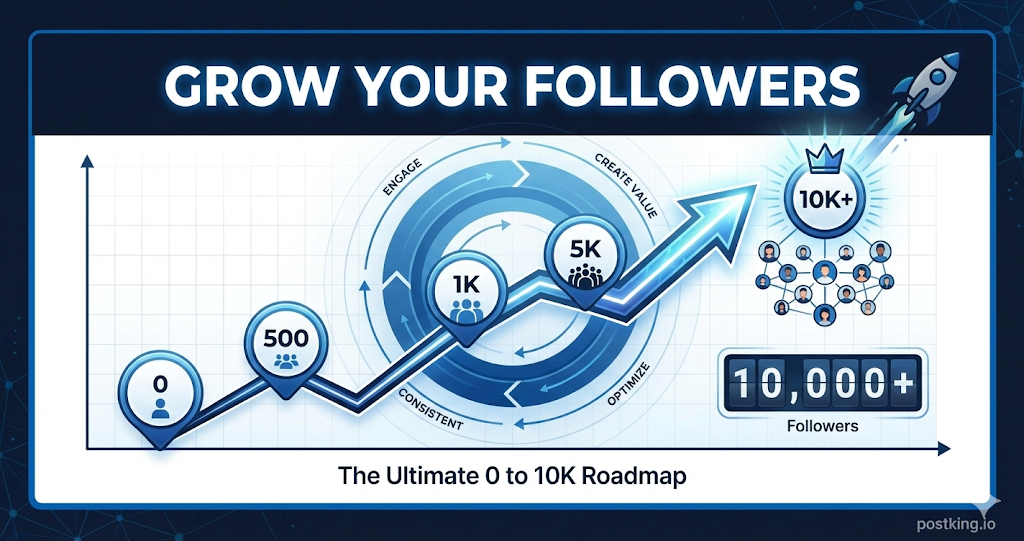
How to Grow LinkedIn Followers: A Realistic Guide to Organic Growth
Learn proven strategies to grow your LinkedIn following organically. Covers the follower growth flywheel, content that attracts followers, engagement tactics, and realistic timelines from 0 to 10,000 followers.
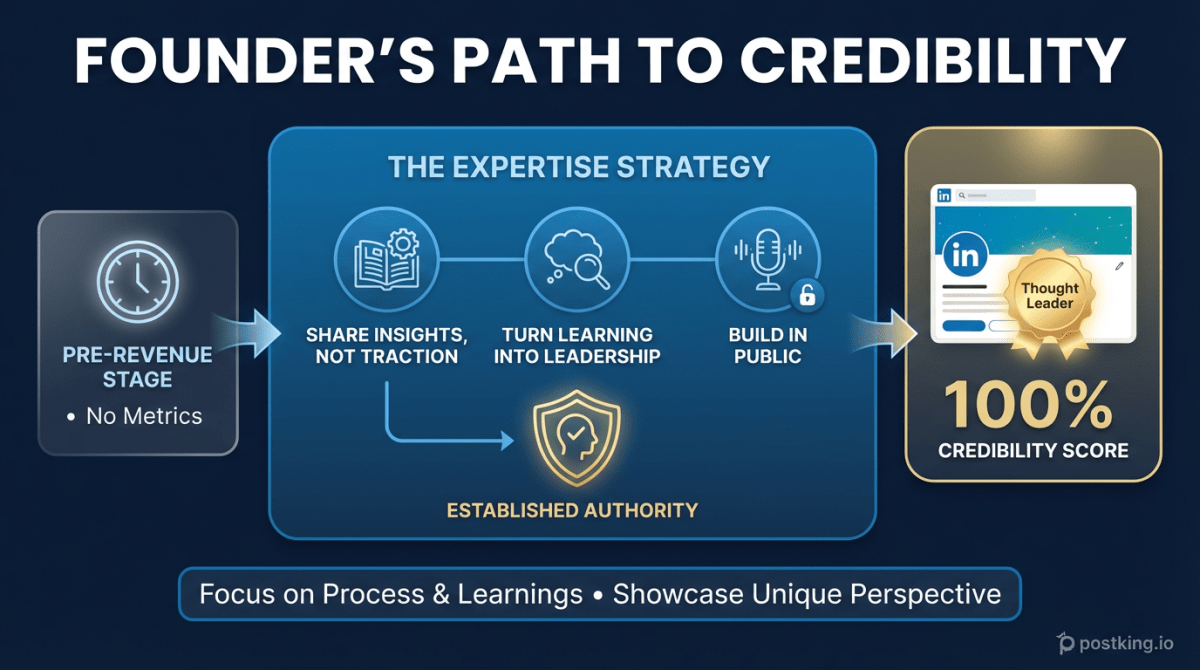
The Pre-Revenue Founder's LinkedIn Playbook: Building Credibility When You Have No Metrics
Learn how to build LinkedIn authority as a pre-revenue founder. Discover content strategies that establish credibility through expertise, not traction, and turn 'still figuring it out' into thought leadership.
LinkedIn Hook Generator
Try our free linkedin hook generator to enhance your LinkedIn presence.
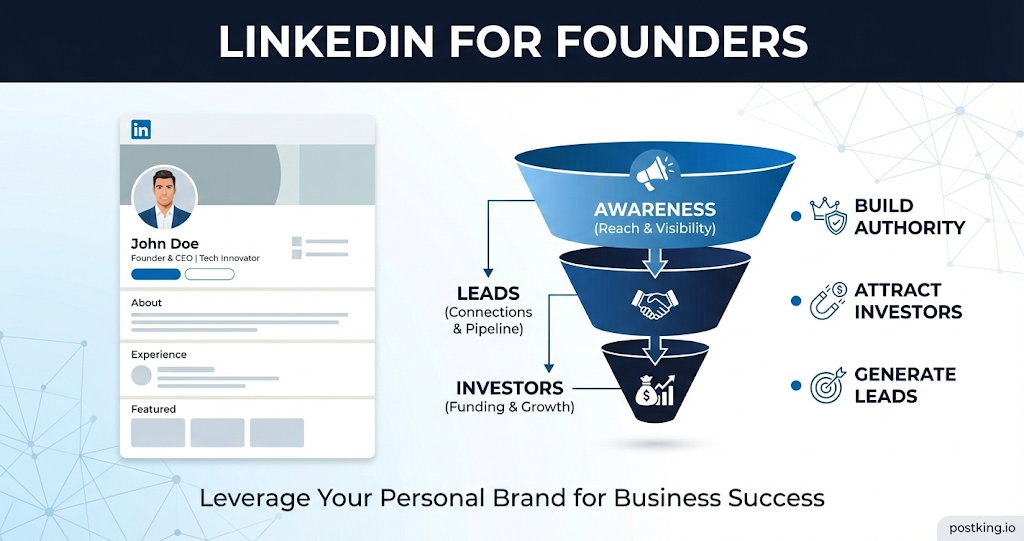
LinkedIn Growth Strategy for Founders (2026 Guide)
A complete LinkedIn growth playbook for founders to build authority, attract investors, and grow pipeline.
LinkedIn Client Acquisition for Coaches and Consultants (2026)
A client-focused LinkedIn strategy for coaches and consultants. Build authority, attract high-ticket clients, and convert profile views into calls.
more engagement with carousels
Create scroll-stopping LinkedIn carousels in under 60 seconds. No design skills needed.
Try Carousel Generator